Skip to content
  • Free delivery* and returns
  • Packed with care, delivered within 1-3 working days
  • 30 days consideration period
  1. Home
  2. Blog

Our blog

On this blog page you can read inspiring and recognizable stories of moms and dads (to be) and experts about their special profession. In addition, you can read the fun blogs about our newest items, checklist and tips.

An Anxious and Uncertain Pregnancy

An Anxious and Uncertain Pregnancy

In June, Lieke gave birth to her first child, a baby boy. But during her pregnancy, she couldn’t feel as happy and joyful as she had expected — overwhelming uncertainty and fear dominated her experience. Lieke felt lonely in her emotions during pregnancy. In this blog, she shares her story and hopes to break the feeling of loneliness for (expectant) mothers who experience the same. Most stories about pregnancy focus on how special it is to feel life growing inside you, how you radiate with joy, and how you feel like you can conquer the world. My experience was the complete opposite. Normally, I’m a confident young woman, but the moment I became pregnant, I became incredibly insecure, scared, and lonely in those feelings. Enjoying pregnancy? That didn’t happen for me. On the morning of October 1st, 2020, my partner and I stood in the bathroom together as I took a pregnancy test. The idea of having a baby had only come up a few months earlier, and the two previous attempts had been unsuccessful. We were both heavy smokers, so if the test was positive this time, it would be the perfect excuse to join "Stoptober" — the annual stop-smoking challenge — and use that as a cover for quitting. After I took the test, we waited for the result. Huh? Two lines? That means pregnant, right? We couldn’t believe our eyes. Still in disbelief and dazed by the result, I crawled back into bed. This can’t be real, can it? We agreed to quit smoking immediately, just in case the test was correct. My partner left for work, and I got ready for my own workday. Sitting in the car, the reality slowly started to sink in. The test was positive, and that’s hard to fake, but I didn’t want to get too excited — because if it really was true, so much could still go wrong. Subconsciously, I decided to protect myself from disappointment. The next day, I took another test because I still couldn’t believe I was actually pregnant. Again, it was positive. So, I called my doctor, assuming I’d need to bring in a urine sample so they could confirm the pregnancy themselves. But when I spoke to the assistant, she congratulated me immediately and advised me to register with a midwife practice, wishing me good luck with my pregnancy. Okay… time to adjust my expectations. Which practice should I call? After reading some reviews, I made my choice. The receptionist asked me some questions, estimated that I was four weeks pregnant, and scheduled the first ultrasound for when I would be eight weeks along. That meant four more weeks of waiting for someone to officially confirm I was really pregnant. Those four weeks felt like an eternity. Every time I went to the bathroom, I checked for bleeding. I was so afraid of miscarriage. I googled statistics on how many women miscarry — and the number was higher than I expected. Not helpful for my anxiety. And when I started to feel cramps in my lower abdomen, the panic really kicked in. We called the midwife to explain my symptoms. She reassured me that I was likely feeling implantation cramps, which is normal, and suggested using a hot water bottle to ease the discomfort. When the day of the ultrasound finally arrived, I was extremely nervous. I had secretly asked a few pregnant friends which midwife practice they used, and two of them went to the same one I had chosen. Naturally, I didn’t want to run into anyone I knew. Luckily, when we arrived, the waiting room was empty except for us — a relief. Soon, it was our turn, and I lay down for the scan. The midwife placed the device on my belly, and we could already see an oval shape. She immediately spotted a heartbeat. She also did an internal scan, where we could hear the heartbeat too. But I stayed guarded. I kept telling myself so much could still go wrong. After the successful first scan, we scheduled the next one and went home with good news. You might think: how lucky to see and hear that little heartbeat! And yes, I was grateful — but I still couldn’t feel happy. Fear of failure and disappointment dominated everything. Allowing myself to feel joy, knowing things could still go wrong? I couldn’t do that to myself. From that moment on, I lived from scan to scan. The next ultrasound was in three weeks, and if that one was good, we’d have the “green light” to share the big news with family and friends. Meanwhile, I kept checking for bleeding every time I used the bathroom. By the time of the second scan — the dating ultrasound — I was, once again, incredibly nervous. At the appointment, I lay down for the scan, and what a difference compared to the first one! Before, we saw a tiny oval blob; now it looked like a little human. BIZARRE! The midwife was cheerful and enthusiastic, as if she’d never seen something so beautiful. Everything looked perfect. We received our official due date and left with great news. They also asked if we wanted to do the NIPT test. Choosing whether or not to do the NIPT test was incredibly difficult. Of course, I wanted a healthy baby, but I didn’t want to be faced with making a decision about terminating the pregnancy if abnormalities were detected. My fear of failure and disappointment with this pregnancy played a huge role in that decision. Ultimately, I chose not to do the NIPT test. With the positive dating scan behind us, it was time to share the big news. The warm and happy reactions were overwhelming. Everyone said the same thing: ENJOY IT! Well… that’s exactly what I couldn’t do. I felt guilty that everything was going so well for us, yet I couldn’t feel happy. What did I have to complain about? I got pregnant quickly, no miscarriage, and everything looked fine. So why wasn’t I happy? A little voice in my head kept saying things could still go wrong — that my body wouldn’t be able to carry out this incredible task, that my body would fail me. So I lived from scan to scan, and I especially looked forward to the gender reveal ultrasound. Boy or girl — I didn’t care. I just wanted to know and, most importantly, to see our little human again, to check if everything was still okay inside. But two days before our gender ultrasound, the whole country went into lockdown due to rising COVID-19 cases. Only medically necessary scans were allowed — gender scans were considered “fun” and therefore non-essential. I was devastated. Tears streamed down my face. I had looked forward to this moment so much, and now it was taken from me. I felt defeated and robbed. My partner saw my emotions and wanted to do something for me. He searched for a practice still willing to perform the scan. After all, they were open — and who would check what kind of scan I was coming for? After some searching, he found a practice willing to make an exception. So we made the appointment. A bit later than planned, we were on our way to the scan. Naturally, I was nervous again. At the appointment, our little one wasn’t eager to reveal themselves, but after some effort, we finally saw it: a boy! One more hurdle remained — the 20-week anatomy scan. This detailed medical check could reveal whether the baby had severe abnormalities or was not viable at birth. We were warned that it would be a nerve-racking scan, with the technician only telling us the results at the end. Luckily, we had an incredibly kind woman who explained each step and immediately told us what she saw and whether it looked good. Everything looked perfect — nothing to worry about. After the positive 20-week scan, I finally started to relax. I could feel our baby moving more often, providing constant reassurance that everything was okay. Each movement filled me with warmth, and for the first time, I could actually enjoy something. Once I passed the 24-week mark — when a baby is considered viable in case of premature birth — I could breathe a sigh of relief, and time suddenly started to fly. I finally felt comfortable shopping for baby clothes, blankets, and other essentials. I had put it off, afraid that if something went wrong, I’d be left with painful reminders. At 27 weeks, I scheduled a 3D ultrasound. It cost a small fortune, but it was absolutely worth it. This scan wasn’t about measurements or growth. It was simply to look at our little miracle, to see his face and what he was doing in there. For the first time, I could enjoy a scan and see what I had been longing to see. I was determined to take maternity leave four weeks before my due date. I wanted as much time with my baby as possible. Now I understand why four weeks is the maximum — that last week was exhausting, and I work in an office job! Like most pregnant women, I was done by the final weeks. At 38 weeks, I could barely sleep. I was completely drained. There I was again, sitting at the midwife’s office with tears in my eyes — I had had enough. She understood but reminded me that it could still be another four weeks, so I had to hang in there. Luckily, I didn’t have to wait long. A few days later, the early contractions began, and at exactly 39 weeks, after a short and smooth delivery, our perfectly healthy son was born. What a hell of a ride this pregnancy was — but I did it! I hope we can break the taboo together. Pregnancy and motherhood can be hard or challenging, and that’s completely okay! Usually, only the positive sides are shared, which made me feel like my emotions weren’t valid. That made me feel lonely, even though I know many (expectant) mothers experience these feelings. I’ve never hidden how I felt during pregnancy. I wanted to break the loneliness by talking about it. Some people listened; most didn’t react much. Let’s make space for emotions — the good and especially the difficult ones. Life isn’t always perfect, and that’s what makes us human — and mothers.
Een eerlijk verhaal over de kraamperiode en kraamtranen

Een eerlijk verhaal over de kraamperiode en kraamtranen

Laura (28) woont samen met haar man Tommy, zoontje Teun en hondje Sep in het huis aan het water in het Noord-Hollandse Avenhorn. Laura is juf en mama van 6 maanden oud zoontje, Teun. Daarnaast is ze ook blogger van eerlijke mama verhalen, want hoe fijn is het om ook eens te lezen dat het ergens anders ook niet altijd lukt, dat je met je handen in je haren zit of stiekem doet alsof je hem niet hoort als hij om 05.00 uur denkt dat de ochtend begonnen is. In deze blog vertelt Laura haar eerlijke verhaal over de kraamperiode en de kraamtranen die daarbij kwamen kijken.Donderdagochtend 29 juli. Met Teun op schoot, word ik, gehuld in oversized ondergoed, met maandverband zo dik als een volgepoepte luier, het ziekenhuis uitgereden. Moe, trots, voldaan en gelukkig kijk ik naar mijn mannetje die in de Maxi-Cosi op schoot ligt. Ogen gesloten, rimpels in zijn gezicht, aangekleed in zijn met zorg uitgekozen geboortepakje. Hij is er. Eindelijk!Een uur later zit ik vol adrenaline met een glimlach op mijn gezicht op de bank om de kraamhulp welkom te heten. Ongemakkelijk ook, want de hechtingen van onder trekken en mijn buik voelt alsof ik minstens twee weken zware buikgriep heb gehad. Opgewekt kijk ik toe hoe ze bij Teun kijkt en meteen weet hoe ze hem moest vasthouden, hoe ze hem kan sussen en verschoont ze zonder blikken of blozen zijn luier. Ik voel een onrust bij mezelf. Ik moet dit ook kunnen, ik ben zijn moeder. Ik moet begrijpen wat hij nodig heeft, waarom hij huilt. Ik sta op, voel me verplicht om in mijn huis te vragen of iemand iets wil drinken.De dagen die volgen zet ik steeds een glimlach op als iemand vraagt hoe het gaat, negeer ik mijn drukkende, dikke kraamverband en zet ik mijn kiezen op elkaar als ik moet plassen. Ik ontvang alle kraamvisite en zit iedere ochtend netjes om 9 uur beneden als de kraamhulp aankomt. Ook bij haar geef ik aan dat het goed gaat. Dat ik pijn heb, maar dat dat vast normaal is. Zonder mokken luister ik naar de uitleg over verschonen, het wegen van Teun en onderga ik de dagelijkse onderzoeken van de nacontrole.Ik voel me slap, moe, kan nauwelijks op mijn benen staan en mijn tepels voelen uitgeleefd van alle keren borstvoeding. Maar ik hou me groot. Teun is geboren en ik moet gelukkig zijn, daarvan genieten en dankbaar zijn.De vierde dag zit erop. De kraamhulp trekt de voordeur achter haar dicht. Teun stopt niet met huilen en ik weet niet meer wat hij nodig heeft. Terwijl hij op het verschoningskussen voorzien wordt van een schone luier stort ik in. De pijn van de hechtingen is intens en ik ben op. Ik probeer mij groot te houden, wil mij niet laten kennen, ik moet er voor Teun zijn. Ik moet net als andere moeders op die roze wolk zitten.Alsof het afgesproken is, komt op dat moment mijn vader langsgefietst. Hij stopt even en zwaait vrolijk naar binnen. Het lukt mij te glimlachen als een boer met kiespijn. Ik zwaai terug. Hij steekt zijn duim op als vraag hoe het gaat. Een druppel, ik kan niet meer, alles doet pijn en ik kan het pasgeboren huiltje niet meer horen. Zonder mij nog in te kunnen houden barst ik in huilen uit.De dagen die volgen zien er hetzelfde uit. Weer om 9 uur beneden en ik blijf doen alsof het goed gaat. Bij iedere nieuwe uitleg aan Tommy, ga ik er, steunend op de kast, naast staan. Ik moet het ook weten. Fysiek gaat het niet zo lekker. Mijn baarmoeder zakt niet en de hechtingen blijken niet goed gepakt te hebben. Ze worden eruit geknipt en een open wond blijft over. Ik probeer het positief te blijven zien. Maar iedere dag rond een uur of 4, zodra de kraamhulp langs het raam naar huis fietst, stort ik in.Het schuldgevoel groeit. Waarom kan ik niet van ieder moment genieten? Waarom moet ik niet huilen van geluk, maar huilen van wanhoop? Waarom heb ik mij afgevraagd of ik dit wel wil, of ik dit wel kan. En waarom heb ik tegenover mezelf uitgesproken dat we te vroeg zijn begonnen met kinderen. Kraamtranen zijn toch tranen van geluk? Urenlang kunnen kijken naar je baby en zo intens gelukkig zijn dat je moet huilen van vreugde. Tranen omdat hij een schattig brabbelend geluidje maakt en huilen omdat je voor de zoveelste keer een onwijs lieve tekst leest in een kaartje. Geen tranen, omdat je het niet meer ziet zitten.Op de laatste dag van de kraamweek komt de verloskundige langs. Ze vraagt hoe het gaat en of we het een beetje redden. Dit is het eerste moment dat ik, naast de ouders, aangeef dat het niet zo goed gaat. Ik hoor dat dit erbij kan horen. Dat je ongelukkig kunt terugkijken op je bevallig, fysiek nog niet in orde bent en je hormonen alle kanten opvliegen. Dat ik mezelf goed in de gaten moet houden en dat als deze gevoelens blijven, ik professionele hulp kan zoeken als ik daarvoor open sta.De weken die volgen lijkt de grijze wolk in mijn hoofd op te lossen. Steeds vaker komen er lichtpuntjes naar voren. Ik begin mijn eigen positieve zelf, die oog heeft voor kleine bijzondere momenten, weer te herkennen. Ik geniet van Teun zijn brabbels, zijn lieve gezichtje tijdens het slapen en kan zelfs genieten van de zure poeplucht die uit zijn luier omhoogkomt.Die roze wolk.. Voor mij soms meer eentje met zware regen en af en toe een roze bliksemschicht.Laten we vooropstellen dat ik ook echt genoten en gelachen heb die eerste dagen. Toen Teun voor het eerst naar buiten mocht. Toen Teun zijn eerste plasje deed, recht over Tommy heen en toen hij voor het eerst in slaap viel in mijn armen. Kraamtranen zijn niet alleen van vreugde, maar ook van pure onmacht en frustratie. Je zit soms huilend op de bank als je terugdenkt aan die zware bevalling, of als je je kleintje staat te wiegen, omdat hij weer wakker werd toen je hem slapend weg probeerde te leggen. Als je weer een nacht 2 uur je ogen dicht hebt kunnen doen en dat niet eens aaneengesloten. Het mag er ook zijn.Wees lief voor jezelf en gun jezelf tijd. Je hoeft niet alles perfect te doen. Zelfs de kraamhulp heeft het moeten leren.Liefs van Laura Meer blogs van Laura over eerlijke mama verhalen lees je hier.Foto gemaakt door Elles Anne Fotografie
Papa aan het woord

Papa aan het woord

Tom is getrouwd met Sarah en is op 26 oktober voor het eerst vader geworden van dochter, Lía. Hij vertelt in deze blog over zijn ervaringen van de zwangerschap, de bevalling en de weken na de bevalling.Twaalf weken al, wat gaat de tijd snel! Op 26 oktober werd ik vader van een dochter die naar de naam Lía luistert. Het leven? Dat is anders, heel anders.. maar wel beter. Ja hoor, veel beter. Wat een avontuur!Sarah en ik fantaseerden al lang over een kleintje. We zijn “high school lovers” en ondertussen veertien jaar samen, waarvan drie gehuwd. Een kleine mini-me die ik stap voor stap zou begeleiden in het uitbouwen van haar leven, dat was de droom. Ik zeg ‘haar’, omdat ik dolgraag een dochter wilde.ZwangerschapHet beeld van een roze wolk verdween al snel, na tien weken zwangerschap kreeg Sarah last van bekkeninstabiliteit, iets wat haar tot op de dag van vandaag nog steeds parten speelt. Last werd al snel ‘extreme last’: zelfstandig draaien in bed of met de auto rijden was lange tijd niet meer mogelijk, wat resulteerde in veel stress en als ‘daddy-to-be’ ging ik toen al noodgedwongen op zoek naar een evenwicht tussen het werk en zorgen voor Sarah en onze ongeboren dochter. Het ergste als man tijdens een zwangerschap? Het machteloze gevoel dat ik kreeg bij het kijken naar mijn echtgenote in pijn. Ik ben iemand die altijd voor oplossingen probeert te zorgen, waarom kon ik dat nu dan niet?BevallingEen rollercoaster van emoties, dat is elke bevalling wel. Ik had al respect voor mijn vrouw, maar na negen loodzware maanden kan ik vandaag moeilijk in woorden uitdrukken hoe sterk het vrouwelijke geslacht écht is. Op 25 oktober trokken Sarah en ik in de avond naar buiten voor een wandeling. Een wandeling die ze moest doen om haar suikerwaarden laag te houden, want er werd ook zwangerschapsdiabetes vastgesteld. Heren, neem een vrouw haar lekker eten af en je hebt een probleem, maar ik daag jullie uit om een zwangere vrouw haar eten af te nemen. Good luck en doe je loopschoenen aan. Na honderd meter wandelen kreeg Sarah veel last van haar heupen, meer dan andere avonden. We keerden terug en besloten naar bed te gaan. Ze voelde de baby niet meer echt bewegen en we raakten wat ongerust. Sarah besloot om nog een keer naar het toilet te gaan en onderweg breekt haar vruchtwater. Dit is het dan, eindelijk. Haar vluchtkoffer stond klaar en een 45 minuten later stonden we in het ziekenhuis, om 23u40. En dan is er maar één gouden tip voor aanstaande vaders wanneer het gaat over de tijd tussen aankomst in het ziekenhuis en de geboorte: Niet veel praten (eigenlijk niet) en wees bereid om je hand gedurende vijf dagen niet meer te voelen van het knijpen. Lía werd geboren om 11u10.Na de bevallingJe wandelt het ziekenhuis binnen met twee en wandelt enkele dagen later terug naar buiten met drie, een bizar gevoel. Nooit was ik als chauffeur voorzichtiger dan de weg van het ziekenhuis naar onze woning. Werkelijk ie-de-reen leek een wegpiraat. De verantwoordelijkheid die je vanaf de geboorte draagt -en voelt- is enorm en het is niet allemaal rozengeur en maneschijn. We zijn nog steeds zoekende naar structuur en krijgen elke dag wel een ander vraagstuk voorgeschoteld waar we een oplossing voor moeten vinden. Spontaan thuis vertrekken heeft plaatsgemaakt voor een doordachte planning. Maar.. we durfden het ook aan om met Lía richting Parijs te trekken om het nieuwe jaar in te zetten, een topbeslissing van onzekere ouders, want we hebben ontzettend hard genoten. Ze begint steeds meer te lachen en geluidjes te maken en elke keer als ik naar haar kijk sta ik verstelt van de gevoelens die in een mensenlichaam zitten. Het leven is nu pas écht begonnen, wat ben ik een ontzettend trotse papa.TIPGun jezelf de tijd om te wennen aan het ouderschap. Het instinct zit er van nature in, je gaat heus wel slagen. Probeer daarnaast ook tijd te nemen om met je partner tot rust te komen, een kindje geniet wanneer zijn/haar ouders ook kunnen genieten (hoe moeilijk dat in het begin ook lijkt, er zijn altijd wel mini-mogelijkheden). En praktische parenting advice van iedereen die je tegen het lijf loopt? Daar luister je met een smile naar, maar nadien doe gewoon wat voor jullie goed aanvoelt. En als je baby wat melk teruggeeft of hij komt uit een badje dan zijn er gelukkig nog steeds de hydrofiele doeken van Jollein, Enjoy!
A day in the life of a midwife

A day in the life of a midwife

Ankie lives with her partner and is the mother of four children (aged 3, 7, 11, and 13). She has been a midwife in Assen for nearly 14 years, working at Aiber Midwives and Verloskundigen-Kloosterveen. In this blog, Ankie takes you through a typical day as a midwife. It’s Wednesday evening, and I have just taken over the shift from my colleague. For the next 48 hours, I am on call for all births and phone calls. When I wake up Thursday morning, I’m happy I managed to get a good night’s sleep. Full of energy, I start my visits. With the radio turned up to 10 and my singing voice only suitable for a private audience, I drive through my hometown of Assen. All new mothers receive a visit from us every other day during the first 8-10 days after birth. Sometimes it’s just a quick check-in to see how things are going, but usually, we chat a lot. We discuss the birth in detail and how the recovery is progressing. Because yes, recovery doesn’t always go smoothly. Feeding problems, painful engorged breasts, sensitive stitches, all while coping with a hefty dose of hormones. This is the average new mother... I start with Willemijn, who gave birth to her first child five days ago. Her delivery didn’t go quite as planned, but despite that, she looks back on it positively. The day before yesterday, my colleague visited her and she was glad it was all over and she could now enjoy her beautiful baby girl. Although breastfeeding was still a bit challenging, she visibly enjoyed her new role as a mother, fueled by the adrenaline that is present during the first 2-3 days after birth. I stand at the door, and as soon as I enter, I can see it’s not her day. She’s tired! It was another restless night and breastfeeding is still not going well. The little one isn’t latching properly yet, and in the first week, that often requires a lot of patience. Just as we both get a cup of tea from the maternity nurse, she bursts into tears. “How do people do this?” Willemijn asks. I comfort her by saying it’s a completely normal feeling, very common, and that a better night is definitely coming. As a mother of four, I completely understand her feelings. Whole days are spent feeding, comforting, changing diapers, and not forgetting to eat and drink yourself—and oh yes, sleeping whenever possible. It’s especially intense with the first child. Now that I have four children, I sometimes long for how it was with just one baby, but then I quickly remember that was actually the hardest. By the second, third, or fourth child, you usually know what to expect and tend to be more confident than with the first. We chat a while longer, and once the tears have dried and we’ve even shared a few laughs, I advise her on some breastfeeding tips and suggest she get some fresh air because the walls are closing in on her. Just a short walk outside—not too far—just to clear her head, and then some rest while the maternity nurse watches the baby. Relieved with a new plan for the next 24 hours, a big hug she desperately needed, and a caring maternity nurse, I continue with my visits. The great thing about postnatal visits is that, in most cases, there’s no time pressure like at the clinic. Unless there’s a birth in progress—in which case, I sometimes have to speed up my visits. Not exactly my best trait in this task. My husband calls it a tea party, but fortunately, we midwives know better. You are responsible for the health of mother and child. You want everything to go well during that first week. Usually, you provide lots of explanations and advice or offer a listening ear and sometimes a supportive arm... and yes, sometimes when everything goes really well, we do end up chatting quite a bit and it really feels like a tea party. So maybe my husband has a little bit of a point after all...
5 Tips for Decorating Your Baby’s Room

5 Tips for Decorating Your Baby’s Room

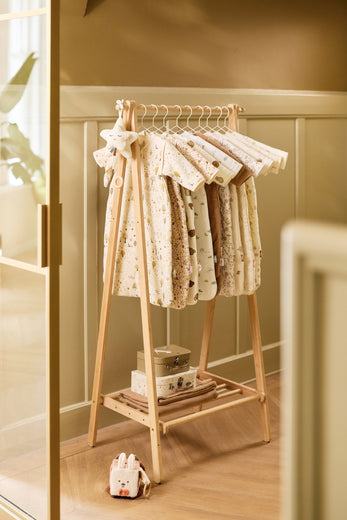
  One of the most exciting parts of being pregnant is decorating the baby’s room. Collecting the most beautiful items and products especially for that little miracle growing in your belly. Decorating the nursery is something you do with your heart—and your intuition! There are no strict rules, but we can imagine it’s nice to have some helpful guidelines. What should you pay attention to when decorating the nursery? Where do you start? We’re sharing the 5 most important tips with you! Tip 1: Get Inspired Take your time to gather enough inspiration. Think carefully about the kind of style you want in the nursery. Maybe you already have a few ideas in your head. These can be your starting point.You can find inspiration everywhere: online on Pinterest by searching for “baby room,” “baby styling,” or by looking on Instagram using hashtags like #nurserystyling, #babyroom, or #babystyling. Tip 2: Color Plan & Shopping Mood Board After gathering ideas, it’s fun to create a mood board with your favorite styles. It gives you a clear overview and is super handy when shopping online for nursery items. A key part of this mood board is your color plan! It’s even smart to start with this so you can build your choices around it. Look online for colors you love and keep them in mind while shopping. You could also visit a DIY store for color samples, but browsing for color inspiration online is a great alternative.Make sure to collect images that show an overall mood and tell a cohesive story. Do you want a bold room? Or something sweet, or maybe a timeless look? Think it through and make a clear choice—it will make decorating much easier! Tip 3: Create a Good Base A solid base in the nursery is key to styling the rest. Think about a good floor, a lovely wall color, and matching window coverings. Maybe you’d like to add wallpaper with a fun print that fits your theme. A good foundation is half the work! Tip 4: Layout & Furnishing Start by looking at the layout of the room. You’ll often need: a changing table, a cradle and/or cot, and a wardrobe or dresser. Decide what layout works best and how the furniture can shine in the space. Working with a small room? Choose furniture with extra storage space, like a drawer under the crib or wall shelves. Don’t be afraid to rearrange the furniture—go with what feels right! Tip 5: The Finishing Touch Once the basics are in place, it’s time to style the nursery! This is the most fun part and where you can add a personal touch. Use your mood board again. Think about your colors and theme. Styling basics for the baby room: Lighting Bedding for the cradle or cot Window coverings Changing pad + changing pad covers Canopy rod + canopy or mosquito net Wall cabinet or shelves Extra styling items: Muslin cloths (check out fun colors!) Cute cuddly toys A rug A mirror (makes the room feel bigger) Storage baskets Nice decorations Plants or dried flowers Also add some personal elements to the baby’s room. Think of the first ultrasound, a sweet card with a meaningful quote, or a pregnancy photo. These personal touches truly complete the space!
Tessa vertelt over haar eerste bevalling, ze had gescheurde vliezen en de bevalling moest ingeleid worden

Tessa vertelt over haar eerste bevalling, ze had gescheurde vliezen en de bevalling moest ingeleid worden

Tessa shares her first birth experience: her waters had broken, and labor had to be inducedTessa (27) became a mother for the first time on October 11 with the birth of her son, Sev. Tessa shares her experience of her first delivery. Her waters had ruptured, and her labor had to be induced. Whether I was dreading labor or afraid of the pain—those were questions I heard often during my pregnancy. But with a level-headed attitude, I’d simply respond: “Ah well, he has to come out one way or another, right?” I was exactly 39 weeks pregnant when, on Thursday evening while brushing my teeth, I felt something trickle down between my legs. It wasn’t much, but I immediately thought of my water breaking. I decided not to call the midwife right away, but to try and get a few more hours of sleep since I wasn’t feeling any contractions yet. After a very quiet night, I did end up visiting the midwife. She concluded that my womb was still full of amniotic fluid and couldn't confirm whether my water had really broken. So, back home to wait and see. But as the day went on, I started losing more fluid, and eventually I needed thick sanitary pads to keep up with the increasing amounts. Back to the midwife we went, and she scheduled us an appointment at the hospital for the next day. At the hospital, they were sure: my water had broken! Or more accurately, it had torn, since I was losing small amounts over time instead of one big gush. I spent one more night in my own bed, still hoping labor would start naturally. Unfortunately, that didn’t happen, so on Sunday morning we had to return to the hospital so I could be induced. With prolonged ruptured membranes, there’s a higher risk of infection, so you need to give birth within 72 hours. Before they could induce labor, my cervix needed to be ripened, which they do by inserting a “string” containing hormones. This has to stay in for 12 hours and can help kickstart contractions. On Sunday night at 10:00 p.m., my boyfriend Michaël had to go home—if there are no signs of labor, partners aren’t allowed to stay overnight. But they promised to call as soon as anything started, so with his phone on high alert, I was left alone for the night. And sure enough, labor started during the night! Looking back, I already felt something just after Michaël left, but at the time I wasn’t sure what it was. Luckily, I had no roommate and could walk around freely. Lying down was impossible for me—every contraction had me leaping out of bed to move through the pain. That night is a bit of a blur in hindsight; I lost all sense of time because I was so focused on managing the pain on my own. I think I even got a bit of sleep as the contractions eased slightly. By 8:00 a.m., I managed to eat a small breakfast, and Michaël thankfully returned. At 11:00 a.m., the midwife came to check me. I wasn’t sure if the rough night had accomplished anything, since things felt pretty calm by morning. But luckily—3 cm dilated! We were allowed to go to the delivery room to "push things along" with labor-inducing medication. At first, I was still "cheerfully" bouncing through contractions on one of those birthing balls, but a few hours later, it wasn’t funny anymore. I was hit with intense back labor. After what felt like an eternity, I stepped into a hot shower. It felt dangerously hot, but the warmth was the only thing that somewhat eased the pain. The wonderful nurse even brought me a popsicle. So there I was—eating an ice-cold popsicle under a blazing hot shower, haha! After 1.5 hours, I had had enough and asked about pain relief options. We chose Remifentanil (a form of morphine), which comes with a button you can press to control the dosage. Between you and me… I really liked it! I felt a bit stoned but was finally able to relax a little between contractions. That relaxation helped my dilation progress, too—within an hour, I went from 5 cm to 10 cm. Time to push! At first, I didn’t really know what I was doing, which resulted in a bunch of burst blood vessels in my face. But thanks to the amazing guidance of my midwife, things quickly improved. I think I even yelled halfway through that they could just leave him in there, but after 45 minutes of pushing, our son Sev was born. The most special moment of our lives! You don’t forget the pain (as the cliché goes), but it’s so worth it, and that makes it more than bearable. Plus, the relief that it’s all over plays a big role too. Yes, giving birth is painful. But relatively speaking, it’s just a few hours out of your life—and the reward is the most beautiful one imaginable. So don’t dread it—you have this primal strength in you too! One final tip from me: During my labor, lots of photos and a few videos were taken. Of course, it’s a personal choice, but I’m really glad they were. I look back at them with pride and joy, and I’m grateful to have those visual memories.